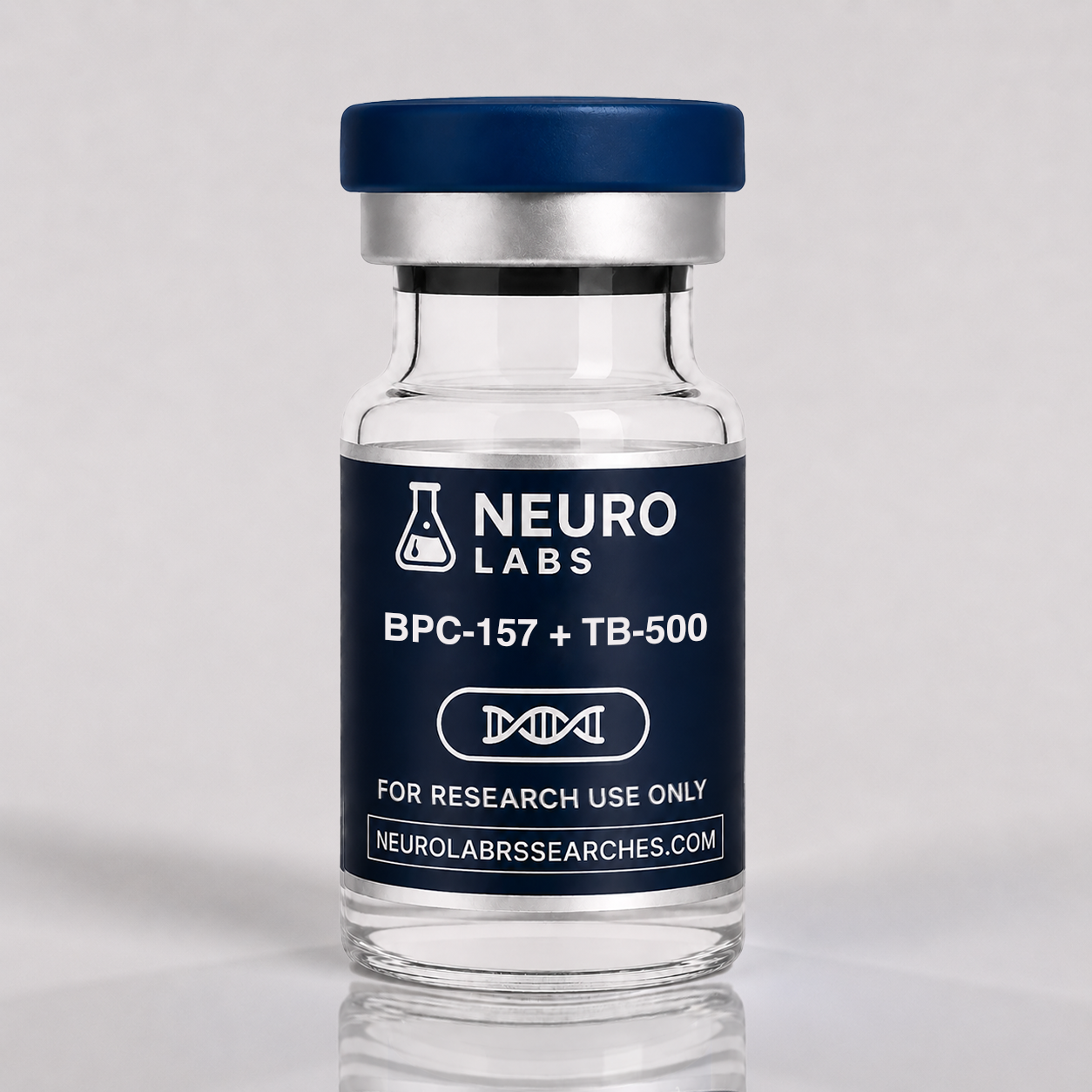
BPC-157 + TB-500 ™

Price range: $132.00 through $263.00

BPC-157 + TB-500 ™

BPC-157 + TB-500 ™ are two experimental peptides often combined into the “Wolverine Stack” for accelerated recovery. BPC‑157 is derived from gastric proteins and is known for tendon, ligament, and gut healing. TB‑500 is a synthetic fragment of thymosin beta‑4, promoting systemic repair through angiogenesis and actin regulation. Together, they represent one of the most promising peptide combinations in regenerative medicine and sports recovery research.

Buy Now
Description

Description

BPC-157 + TB-500 ™

BPC-157 + TB-500 ™ are two experimental peptides often combined into the “Wolverine Stack” for accelerated recovery. BPC‑157 is derived from gastric proteins and is known for tendon, ligament, and gut healing. TB‑500 is a synthetic fragment of thymosin beta‑4, promoting systemic repair through angiogenesis and actin regulation. Together, they represent one of the most promising peptide combinations in regenerative medicine and sports recovery research.

BPC-157 + TB-500 ™ Mechanism of Action:

BPC‑157

  • Stimulates angiogenesis (new blood vessel formation).
  • Enhances nitric oxide signaling for improved blood flow.
  • Promotes growth factor activity in tendons and ligaments.
  • Supports gut lining repair and reduces inflammation.

TB‑500

  • Regulates actin polymerization for cell migration.
  • Encourages angiogenesis and tissue remodeling.
  • Provides systemic healing across multiple tissues.
  • Reduces fibrosis and scar tissue formation.

BPC-157 + TB-500 ™💊 Dosage & Administration (Research Context):

Peptide Typical Research Dose Route Duration
BPC‑157 200–500 mcg daily Subcutaneous or near injury site 4–8 weeks
TB‑500 2–5 mg twice weekly Subcutaneous or intramuscular 4–8 weeks

⚠️ Note: These are research protocols only. Neither peptide is FDA‑approved for human use.

🌟 Benefits of the Stack

Benefit Details
Tendon & ligament repair BPC‑157 accelerates healing of connective tissues
Systemic recovery TB‑500 promotes whole‑body repair
Reduced inflammation Both peptides modulate inflammatory pathways
Muscle recovery Faster healing post‑training
Gut healing BPC‑157 supports intestinal lining repair

⚠️ Safety & Risks

  • Not FDA‑approved for medical use.
  • Evidence base: Strong in animal studies, limited in humans.
  • Potential risks: Injection site irritation, unknown long‑term effects.
  • Athletic restrictions: Both peptides are WADA‑prohibited for competitive athletes.

📊 Clinical & Research Data

Study Peptide Outcome Notes
Rodent tendon healing BPC‑157 Accelerated tendon repair Improved collagen synthesis
Muscle injury recovery TB‑500 Faster muscle regeneration Enhanced angiogenesis
Gut lining repair BPC‑157 Reduced inflammation Protective against ulcers
Combined use BPC‑157 + TB‑500 Synergistic healing Preclinical evidence only

🧴 Practical Applications

  1. Sports injuries: Tendon tears, ligament sprains, muscle strains.
  2. Post‑surgery recovery: Faster wound healing and reduced scarring.
  3. Gut health: BPC‑157 shows promise in protecting intestinal lining.
  4. Systemic repair: TB‑500 supports whole‑body recovery.

❓ Frequently Asked Questions (FAQ) on BPC‑157 + TB‑500™

1. What is BPC‑157?

BPC‑157 is a synthetic peptide derived from a gastric protein, studied for its ability to accelerate tendon, ligament, and gut healing.

2. What is TB‑500?

TB‑500 is a synthetic fragment of thymosin beta‑4, known for promoting systemic healing, angiogenesis, and muscle recovery.

3. Why combine BPC‑157 and TB‑500?

Together, they provide localized (BPC‑157) and systemic (TB‑500) healing, making them complementary in injury recovery research.

4. Is the Wolverine Stack FDA‑approved?

No, both peptides are classified as research chemicals and are not approved for medical use.

5. How does BPC‑157 work?

It stimulates angiogenesis, modulates nitric oxide, and enhances growth factor activity in connective tissues.

6. How does TB‑500 work?

It regulates actin polymerization, enabling cell migration and tissue remodeling across multiple organs.

7. What are the benefits of BPC‑157?

  • Tendon and ligament repair
  • Gut lining protection
  • Reduced inflammation

8. What are the benefits of TB‑500?

  • Muscle recovery
  • Systemic healing
  • Reduced fibrosis

9. What is the typical dosage?

Research protocols often use 200–500 mcg of BPC‑157 daily and 2–5 mg of TB‑500 twice weekly.

10. How are these peptides administered?

They are usually injected subcutaneously or intramuscularly, sometimes near the injury site.

11. Are BPC‑157 and TB‑500 legal?

They are legal for research purposes but banned in competitive sports by WADA.

12. Do they have side effects?

Possible risks include injection site irritation and unknown long‑term effects. Human safety data is limited.

13. Can athletes use these peptides?

No, they are prohibited in professional sports due to performance‑enhancing potential.

14. Is there human clinical data?

Most evidence comes from animal studies; human trials are limited and ongoing.

15. Can BPC‑157 heal the gut?

Yes, research suggests it protects the intestinal lining and reduces ulcer formation.

16. Does TB‑500 help with muscle injuries?

Animal studies show faster muscle regeneration and reduced inflammation.

17. Can these peptides be taken orally?

BPC‑157 has shown oral activity in gut healing studies, but TB‑500 requires injection.

18. Are they safe for long‑term use?

Long‑term safety is unknown; more research is needed before approval.

19. What is the Wolverine Stack used for?

It is studied for tendon injuries, ligament tears, muscle recovery, and post‑surgery healing.

20. What is the future of peptide therapy?

Peptides like BPC‑157 and TB‑500 may play a major role in regenerative medicine, but require extensive clinical validation.

📌 Final Word

This FAQ section highlights the promise and limitations of BPC‑157 + TB‑500™. While animal studies show accelerated healing and recovery, human data is limited, and both peptides remain experimental and unapproved. Their popularity in sports recovery research underscores their potential, but regulatory approval is still pending.

📈 Market & Trends

  • Research peptide suppliers: Growing demand in experimental medicine.
  • Sports recovery interest: Popular among athletes (though banned).
  • Regenerative medicine: Increasing focus on peptides for healing.

📌 Broad Conclusion

BPC‑157 + TB‑500™ represent one of the most promising peptide combinations in regenerative research. BPC‑157 provides localized tendon, ligament, and gut repair, while TB‑500 delivers systemic support through angiogenesis and cell migration. Together, they form a complementary stack for injury recovery. However, both remain experimental, unapproved for medical use, and restricted in competitive sports.