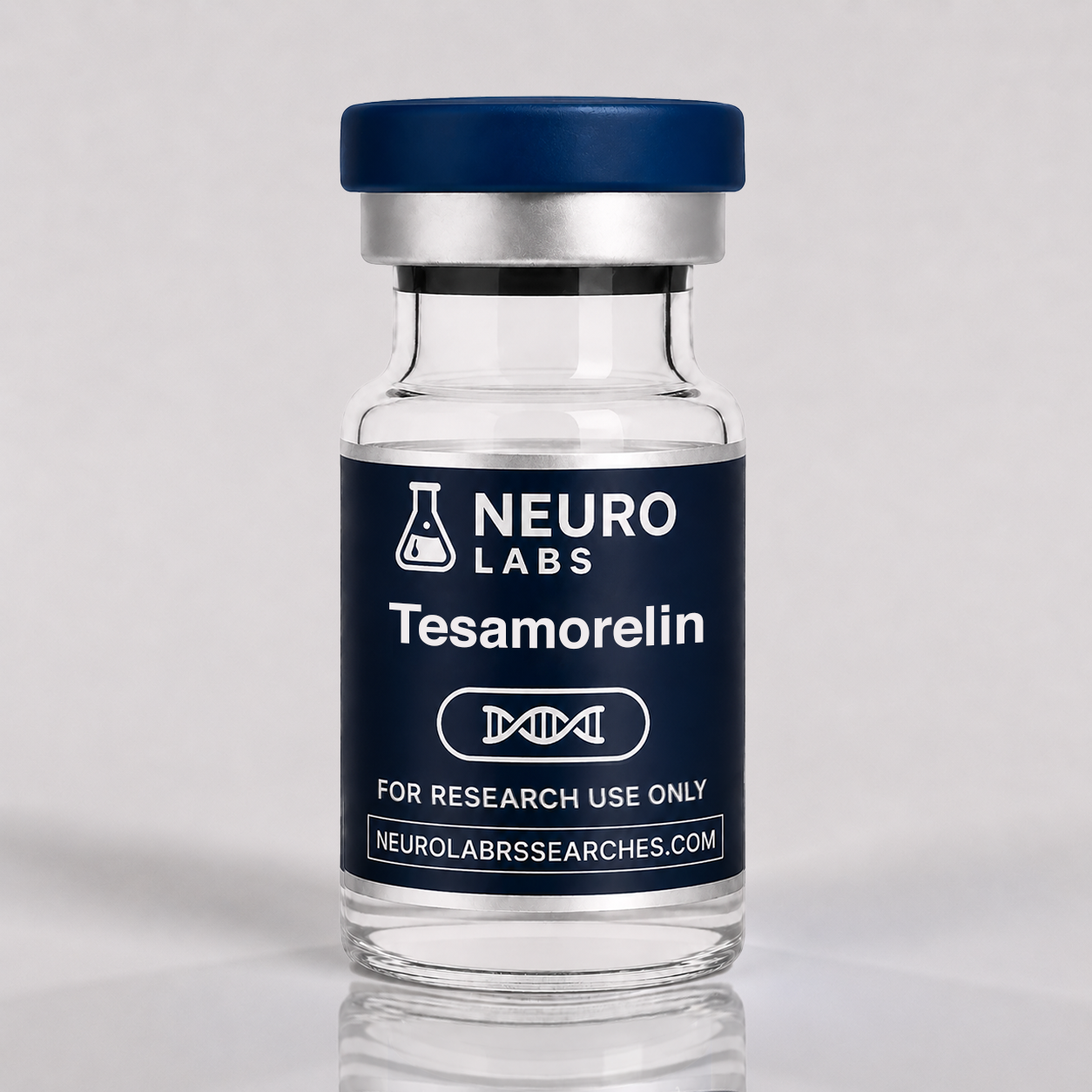
Tesamorelin ®
Price range: $136.00 through $257.00
Description
Tesamorelin ®
Tesamorelin ® is a synthetic analogue of growth hormone–releasing hormone (GHRH), developed to stimulate natural growth hormone secretion. Marketed under the brand name Egrifta®, it is FDA‑approved for reducing excess abdominal fat in HIV‑associated lipodystrophy. Unlike recombinant GH, Tesamorelin works by activating the pituitary gland to release growth hormone in a physiological pulsatile manner, maintaining feedback control and reducing risks of supraphysiologic IGF‑1 levels.
Its importance extends beyond HIV care: ongoing research explores Tesamorelin’s role in liver disease, metabolic disorders, and even cognitive health.
What is Tesamorelin?
- Synthetic peptide: Modified GHRH analogue with enhanced stability.
- FDA approval: First approved in 2010 for HIV‑associated lipodystrophy.
- Formulations:
- Egrifta SV – 2 mg vial, daily reconstitution.
- Egrifta WR – 11.6 mg vial, weekly reconstitution (FDA approved in 2025).
Tesamorelin is not a general weight‑loss drug. Its approval is specific to visceral adipose tissue reduction in HIV patients, where lipodystrophy is a serious complication.
Mechanism of Action
Tesamorelin binds to GHRH receptors in the pituitary, stimulating GH release. This leads to:
- Increased IGF‑1 production in the liver.
- Enhanced lipolysis (fat breakdown).
- Improved protein synthesis and metabolic regulation.
The trans‑3‑hexenoic acid modification at the N‑terminal extends half‑life, allowing once‑daily dosing.
Clinical Importance
HIV‑Associated Lipodystrophy
Lipodystrophy in HIV patients is linked to antiretroviral therapy. Tesamorelin reduces visceral adipose tissue (VAT), improving metabolic health and quality of life.
Metabolic Disorders
Research shows Tesamorelin may reduce liver fat (NAFLD/NASH) and improve glucose metabolism.
Cognitive Health
Preliminary studies suggest Tesamorelin may support cognitive function in aging populations by modulating IGF‑1 pathways.
Dosage & Administration
- Standard dose: 1.4 mg subcutaneous injection daily.
- Reconstitution: Vials must be reconstituted with bacteriostatic water.
- Injection sites: Rotate abdominal sites to reduce local irritation.
Side Effects & Warnings
Common Side Effects
- Injection site reactions.
- Muscle/joint pain.
- Rash, nausea.
Serious Risks
- Hyperglycemia.
- Edema.
- Carpal tunnel symptoms.
- Hypersensitivity reactions.
Contraindications
- Pregnancy.
- Active malignancy.
- Pituitary tumors.
- Prior cranial irradiation.
Research Applications Beyond HIV
Liver Disease
Tesamorelin shows promise in reducing hepatic steatosis and improving liver function markers.
Metabolic Health
Potential benefits in obesity‑related complications and insulin resistance.
Cognitive Studies
Explored for age‑related cognitive decline and neuroprotection.
Comparison: Tesamorelin vs Recombinant GH
| Feature | Tesamorelin | Recombinant GH |
|---|---|---|
| Mechanism | Stimulates endogenous GH | Provides exogenous GH |
| Dosing | Daily subcutaneous | Daily/weekly subcutaneous |
| IGF‑1 levels | Physiological pulsatile | Supraphysiologic steady state |
| Approved use | HIV lipodystrophy | GH deficiency, Turner syndrome |
| Safety profile | Lower risk of IGF‑1 excess | Higher risk of metabolic side effects |
Side Effects of Tesamorelin®
Like all peptide therapies, Tesamorelin may cause side effects. Understanding these helps researchers, clinicians, and patients weigh benefits against risks.
Common Side Effects
- Injection site reactions: Redness, itching, swelling, or pain at the injection site.
- Muscle and joint pain: Arthralgia and myalgia are frequently reported.
- Nausea: Some individuals experience mild gastrointestinal discomfort.
- Rash: Allergic skin reactions may occur.
- Peripheral edema: Fluid retention leading to swelling in hands or feet.
Serious Side Effects
- Hyperglycemia: Elevated blood sugar levels, especially in patients with diabetes or prediabetes.
- Carpal tunnel syndrome: Tingling, numbness, or pain in the hands due to nerve compression.
- Hypersensitivity reactions: Severe allergic responses, including urticaria or anaphylaxis.
- Increased IGF‑1 levels: Excessive IGF‑1 may increase risk of abnormal cell growth.
Contraindications
Tesamorelin should not be used in:
- Pregnancy – risk to fetal development.
- Active malignancy – growth hormone stimulation may accelerate tumor growth.
- Pituitary tumors – contraindicated due to GH pathway involvement.
- Prior cranial irradiation – risk of pituitary dysfunction.
Managing Side Effects
- Monitoring blood glucose: Essential for patients with diabetes.
- Rotating injection sites: Helps reduce local irritation.
- Regular IGF‑1 testing: Ensures levels remain within safe ranges.
- Medical supervision: Tesamorelin should only be used under professional guidance.
Importance of Awareness
Understanding side effects is crucial because:
- It ensures safe use in HIV lipodystrophy patients.
- It helps researchers explore new applications responsibly.
- It supports clinicians in patient counseling and monitoring.
Frequently Asked Questions (FAQ)
1. What is Tesamorelin used for?
It is FDA‑approved for reducing visceral fat in HIV‑associated lipodystrophy.
2. Is Tesamorelin a weight‑loss drug?
No. Its approval is specific to HIV lipodystrophy, not general obesity.
3. How is Tesamorelin administered?
As a daily subcutaneous injection after reconstitution.
4. What are Tesamorelin side effects?
Injection site reactions, muscle pain, hyperglycemia, edema.
5. Can Tesamorelin help liver disease?
Research suggests potential benefits in reducing liver fat, but it is not yet FDA‑approved for this use.
Conclusion
Tesamorelin® is a clinically validated GHRH analogue with unique importance in managing HIV‑associated lipodystrophy. Its ability to stimulate natural GH release while maintaining feedback control makes it safer than recombinant GH. Ongoing research highlights its potential in liver disease, metabolic disorders, and cognitive health, positioning Tesamorelin as a peptide of growing relevance in modern endocrinology.
Related products
Ara-290®
Original price was: $89.00.$79.00Current price is: $79.00.
BA3 Benzyl Alcoh 0.9%™
Original price was: $10.00.$7.00Current price is: $7.00.
Cagrilintide 5mg+Semaglutide 5mg ™
$257.00