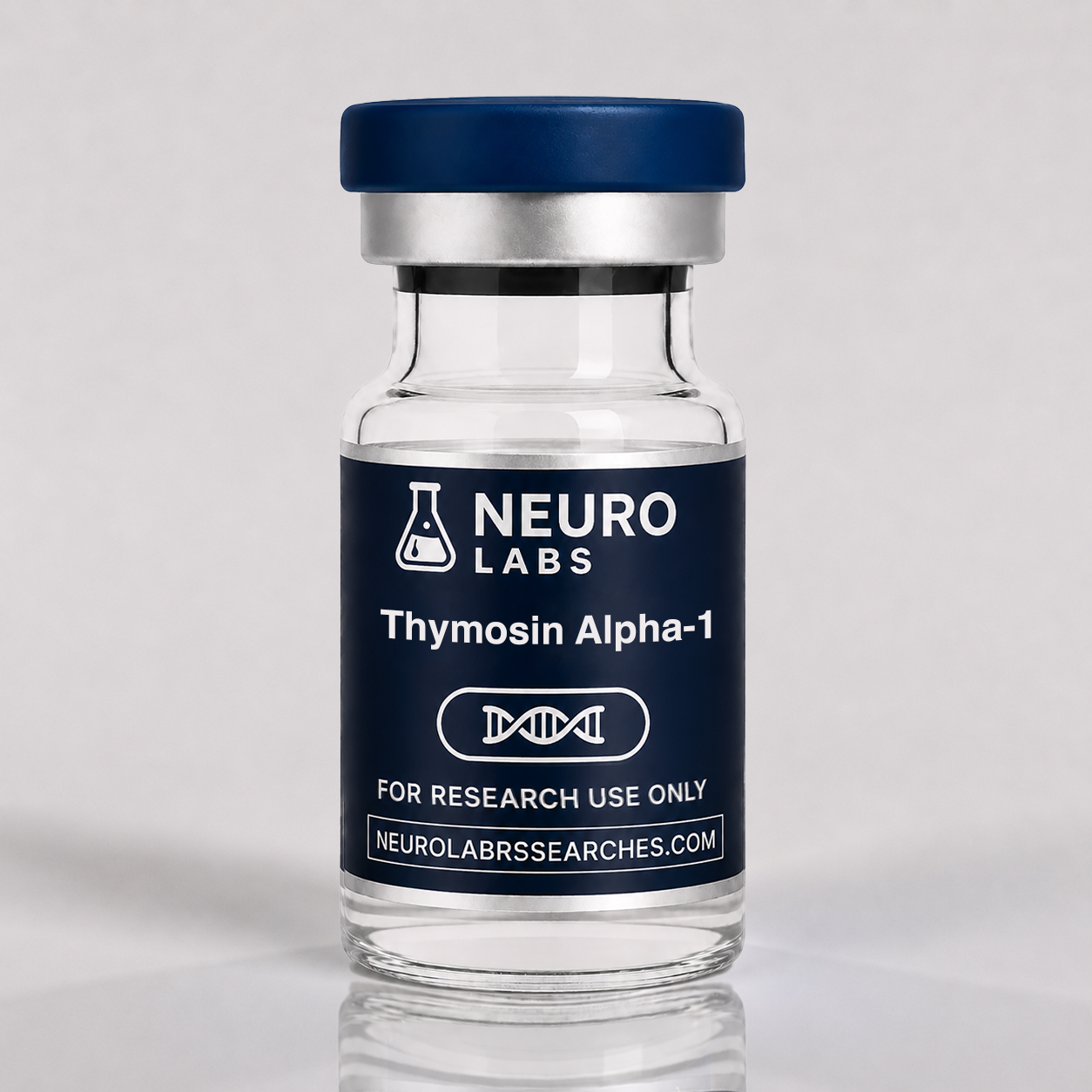
Thymosin Alpha-1 ™
$110.00 – $210.00Price range: $110.00 through $210.00
Thymosin Alpha-1 ™(Ta1) is a naturally occurring peptide that has attracted global attention for its role in immune modulation, antiviral defense, and cancer immunotherapy. At just 28 amino acids long, this small molecule exerts outsized influence on the body’s ability to fight infections and regulate immune balance.
Discovered in the 1970s during thymus peptide research, Thymosin Alpha‑1 was identified as a critical factor in T‑cell maturation. Over the decades, it has been studied in viral hepatitis, HIV, sepsis, and oncology, with clinical approval in more than 35 countries under the trade name Zadaxin. Although not FDA‑approved in the United States, it remains one of the most clinically validated immune peptides worldwide.
Description
Thymosin Alpha-1 ™
Thymosin Alpha-1 ™(Ta1) is a naturally occurring peptide that has attracted global attention for its role in immune modulation, antiviral defense, and cancer immunotherapy. At just 28 amino acids long, this small molecule exerts outsized influence on the body’s ability to fight infections and regulate immune balance.
Discovered in the 1970s during thymus peptide research, Thymosin Alpha‑1 was identified as a critical factor in T‑cell maturation. Over the decades, it has been studied in viral hepatitis, HIV, sepsis, and oncology, with clinical approval in more than 35 countries under the trade name Zadaxin. Although not FDA‑approved in the United States, it remains one of the most clinically validated immune peptides worldwide.
The growing interest in Thymosin Alpha‑1 reflects a broader trend: the recognition that peptides are powerful biological regulators. Unlike synthetic drugs that often target a single pathway, peptides like Ta1 act as natural modulators, fine‑tuning immune responses without overwhelming the system. This makes them particularly attractive in conditions where the immune system is either suppressed (cancer, sepsis, chronic viral infections) or overactive (autoimmune disease, inflammation).
History & Discovery
The story of Thymosin Alpha‑1 begins with the thymus gland, a small organ located behind the sternum that plays a central role in immune development. In the 1960s and 1970s, scientists were investigating thymic extracts to understand how the body trains T lymphocytes, the white blood cells responsible for adaptive immunity.
During these studies, researchers isolated a family of peptides collectively known as thymosins. Among them, Thymosin Alpha‑1 stood out for its ability to enhance T‑cell differentiation and function. This discovery was groundbreaking: it suggested that small peptides could act as hormone‑like messengers, orchestrating complex immune processes.
By the late 1980s, Thymosin Alpha‑1 had moved from laboratory curiosity to clinical candidate. Early trials in hepatitis B and C showed that Ta1 could improve viral clearance when combined with interferon therapy. In oncology, it was found to enhance chemotherapy response and improve survival in certain cancers, particularly hepatocellular carcinoma and melanoma.
The pharmaceutical development of Thymosin Alpha‑1 culminated in the launch of Zadaxin, a commercial formulation approved in countries across Asia, Europe, and South America. Today, Zadaxin is used in hospitals for viral hepatitis, immune restoration in cancer patients, and adjunct therapy in sepsis.
Global Context
The adoption of Thymosin Alpha‑1 varies by region:
- China & Asia: Widely used for hepatitis B and C, often in combination with interferon.
- Italy & Europe: Approved for immune support in oncology and infectious disease.
- Middle East & South America: Used in critical care settings, including sepsis and ICU immune restoration.
- United States: Not FDA‑approved, but available under expanded access programs and studied in clinical trials.
This global footprint underscores the peptide’s versatility. While regulatory hurdles remain in the US, the international acceptance of Thymosin Alpha‑1 highlights its clinical relevance and therapeutic promise.
Mechanism of Action
Thymosin Alpha‑1 enhances immunity through multiple pathways:
- Toll‑like receptor activation (TLR2, TLR4, TLR9): Stimulates dendritic cells and macrophages.
- Cytokine modulation: Increases IL‑2, IL‑12, IFN‑α, boosting antiviral and anticancer responses.
- Adaptive immunity: Strengthens CD4+ helper T cells and CD8+ cytotoxic T cells.
- NK cell stimulation: Improves natural killer cell activity against viruses and tumors.
- Immune balance: Restores function in immunocompromised states (aging, chemotherapy, sepsis).
Thymosin Alpha-1 ™ Clinical Benefits:
1. Viral Infections
- Hepatitis B & C: Enhances interferon therapy, improves viral clearance.
- HIV: Supports immune recovery, reduces opportunistic infections.
- COVID‑19: Studied for reducing severity and mortality in ICU patients.
2. Cancer Immunotherapy
- Improves chemotherapy response.
- Enhances survival in hepatocellular carcinoma, melanoma, lung cancer.
- Synergistic with checkpoint inhibitors (PD‑1/PD‑L1).
3. Sepsis & Critical Illness
- Reduces immune paralysis in septic shock.
- Improves survival rates in ICU patients.
4. Immune Restoration
- Supports immune recovery in aging, transplant patients, and chemotherapy‑induced suppression.
📊 Comparison Table
| Property | Thymosin Alpha‑1™ | MOTS‑c™ | LL‑37™ |
|---|---|---|---|
| Source | Thymus gland | Mitochondrial DNA | Nuclear DNA (CAMP gene) |
| Length | 28 amino acids | 16 amino acids | 37 amino acids |
| Function | Immune modulation | Metabolic regulation | Antimicrobial defense |
| Pathway | TLR2/4/9 signaling | AMPK activation | Immune signaling |
| Applications | Hepatitis, cancer, sepsis | Obesity, diabetes, anti‑aging | Infection control, wound healing |
| FDA Status | Not approved (US) | Not approved | Not approved |
Risks & Precautions
- Not FDA‑approved in the US — available under compassionate use.
- Short half‑life (~2 hours) — requires repeated dosing.
- Injection risks: Local irritation, mild flu‑like symptoms.
- Immune overstimulation: Rare, but possible in autoimmune conditions.
Clinical Trials
- Over 70 published trials in hepatitis, cancer, and sepsis.
- Demonstrated improved viral clearance, survival rates, and immune restoration.
- Ongoing studies in COVID‑19, oncology, and transplant medicine.
Global Regulatory Status
- China & Asia: Approved for hepatitis B/C, oncology support.
- Italy & Europe: Used in cancer immunotherapy and infectious disease.
- Middle East & South America: Applied in sepsis and ICU immune restoration.
- United States: Not FDA‑approved, but studied under expanded access programs.
🏁 Conclusion
Thymosin Alpha‑1™ is a clinically validated immune peptide with proven benefits in viral infections, cancer therapy, sepsis, and immune restoration. Its ability to strengthen both innate and adaptive immunity makes it a cornerstone of peptide‑based immunotherapy worldwide. While not FDA‑approved in the US, its widespread use in other countries highlights its importance in modern medicine.